
The correct shape of the pad
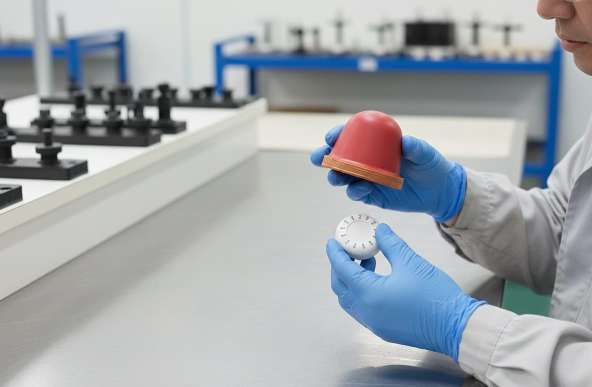
Choosing the right Pad
Color and shape
Choosing the right pad is the heart of pad printing: it’s the bridge between the plate and the final product. The wrong choice can cause logo distortion, air bubbles, or poor ink coverage.
Guide to Choosing the Ideal pad
The golden rule of pad printing is simple: the pad should “roll” over the surface, not press it flat. This fluid movement expels air and ensures a sharp print.
The Shape of the Pad
The shape determines how the ink is picked up and placed on the object.
Round/Pointed Pads: These are the most versatile. The pointed tip facilitates the expulsion of air from the center outward. Ideal for flat or slightly irregular surfaces.
Square or Rectangular Pads: These have flat sides and are perfect for printing long graphics or objects with straight sides. Be careful, though: they tend to trap more air than round pads.
“V”Pads: Excellent for cylindrical or concave surfaces. Their structure allows them to wrap around the object without distorting the image.
Specialty Pads: Custom-designed for specific objects (such as keyboards, knobs, or bottles) where standard shapes cannot reach.
Tip: Always choose a pad that’s at least 20-30% larger than the artwork you want to print. The larger the pad is relative to the logo, the less distortion there will be at the edges.
Color and Hardness (Shore)
In pad printing, the color of silicone often identifies its hardness, measured in Shore A. Although colors may vary depending on the manufacturer, the logic of use remains the same:
Hardness Type Ideal Use Soft (0-4 Shore) Thick Red or White, Fragile thin or very irregularly shaped objects that require the pad to “adapt” without breaking the piece.
Medium (6-12 Shore) Thick Green or Blue The universal standard. Ideal for most industrial and promotional applications. Hard (14+ Shore) Thick Grey or Brown Perfect for very flat surfaces and graphics with very fine details. High pressure ensures surgical definition.
How to decide? The 3-point check-up
For every new job, ask yourself:
What’s the surface like? If it’s rough, you’ll need a harder pad to get the ink into the pores. If it’s smooth, a medium pad will do.
What shape is the object? The more curved the object (e.g., a golf ball), the sharper the pad should be to avoid creases in the print.
How much pressure can it handle? If you’re printing on a light bulb, you’ll need a very soft pad; if you’re printing on a metal block, you can go bold with a higher hardness.